Santa Clara: 408-249-5121
Navigating Your Invisalign Journey: A Comprehensive Timeline


Navigating Your Invisalign Journey: A Comprehensive Timeline
Starting Invisalign is an exciting step, but many patients wonder when they will see results and how long the full process will take. Most cases last about 12 to 24 months. Minor corrections may take around six months, while complex bite or alignment concerns can require two years or longer.
Patients throughout Santa Clara often need a clear timeline to understand what happens between their first tray and their final retainer. At Silicon Valley Pediatric Dentistry and Orthodontics – Santa Clara, Dr. Aaron helps patients understand each stage before treatment begins. Our orthodontist in Santa Clara can provide a more accurate estimate after examining your teeth, bite, jaw relationship, and treatment goals.
The timeline below outlines what to expect throughout your clear aligner journey.
How Long Does Invisalign Usually Take?
Invisalign treatment often takes 12 to 24 months, but no single timeline applies to every patient. Your treatment plan depends on how far the teeth must move and whether your bite needs correction.
The estimated completion date is based on planned tooth movements. It is not an automatic guarantee. Tray wear, appointment attendance, oral health, and how your teeth respond can affect your actual finish date.
A Santa Clara orthodontist may recommend a shorter plan for mild spacing or minor crowding. More involved concerns, such as an overbite, underbite, crossbite, or significant crowding, may require a longer process.
The Complete Clear Aligner Treatment Timeline
Stage 1: Consultation and Evaluation
Your journey begins with a detailed consultation. During this visit, the dental team examines your teeth, gums, facial profile, and bite. This step determines whether clear aligner therapy is appropriate for your needs.
The evaluation may include:
- A review of your dental and medical history
- An examination of tooth alignment and jaw function
- Digital X-rays and clinical photographs
- A discussion of your smile goals
- An initial estimate of treatment length
This appointment is also the right time to discuss previous dental work, jaw discomfort, or concerns about wearing trays consistently.
Stage 2: Digital Records and Treatment Planning
If you move forward, the team collects detailed records. A digital dental scan creates an accurate three-dimensional model of your teeth without the need for traditional putty impressions.
The digital model helps map out planned tooth movement from the starting position to the expected final result. Your aligner sequence is then created based on this plan.
Treatment planning and tray production may take several weeks. Your estimated number of trays and projected timeline become clearer once the digital plan is complete.
Stage 3: Receiving Your First Aligners
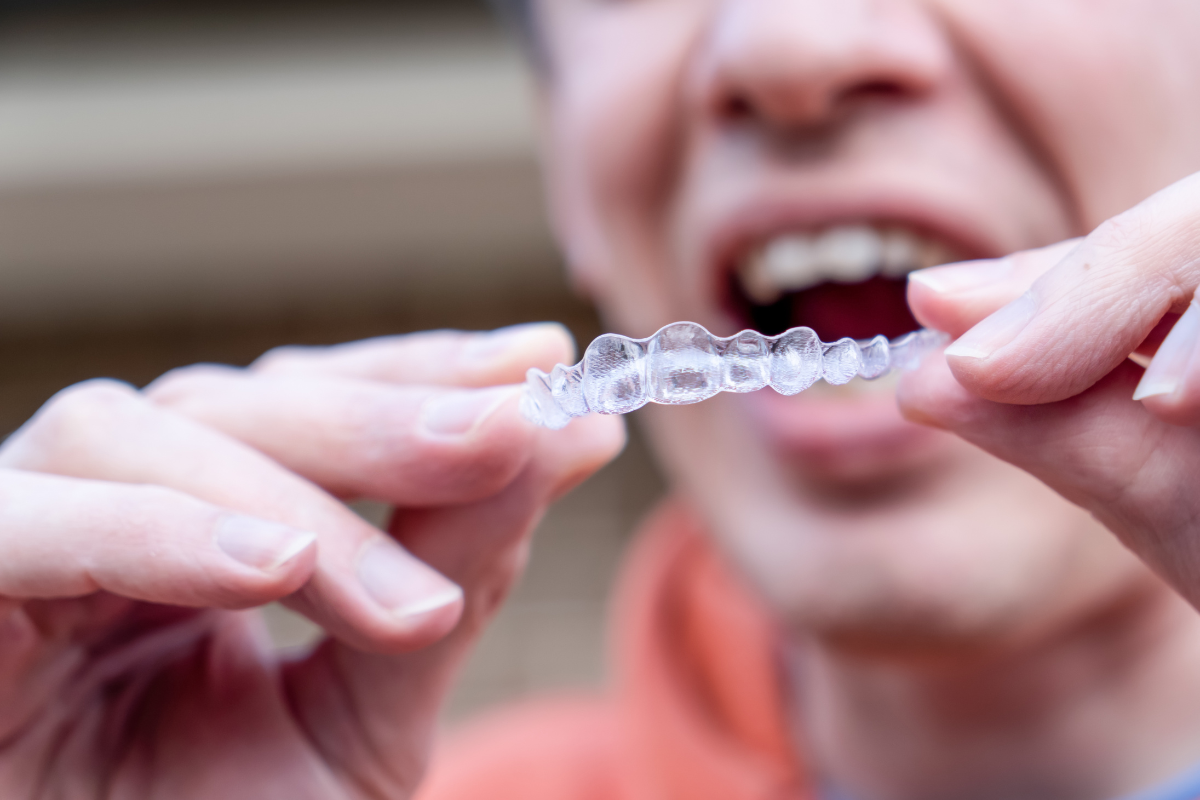
At the delivery appointment, the team checks the fit of your first Invisalign trays and explains how to insert, remove, clean, and store them.
Small tooth-colored attachments may be placed on selected teeth. These shapes give the trays additional grip and help guide controlled movement. Some patients may also need elastics to address their bite.
You will receive instructions covering:
- Daily wear time
- When to change to the next set
- Proper tray cleaning
- Eating and drinking guidelines
- What to do if a tray becomes lost or damaged
Most patients should wear their trays for 20 to 22 hours each day. They should usually be removed only for meals, drinks other than water, brushing, and flossing.
Stage 4: Active Tooth Movement
Active treatment is the longest part of the journey. Each tray applies controlled pressure to move specific teeth gradually. Depending on your plan, you may change trays every one to two weeks.
Mild pressure is common during the first few days of a new set. This usually means the tray is applying the planned force. However, persistent pain, sharp edges, or a tray that does not fit correctly should be reported.
Progress visits generally occur every several weeks. At these appointments, the Santa Clara orthodontist evaluates tracking, checks attachments, and confirms that you are ready to continue through the sequence.
What Can Make Treatment Take Longer?
Your projected schedule may change during care. Common reasons include:
- Wearing trays for fewer than 20 to 22 hours per day
- Skipping ahead or changing trays later than instructed
- Losing or damaging aligners
- Missing progress appointments
- Developing cavities or gum inflammation
- Teeth responding more slowly than predicted.
- Needing additional bite correction
- Failing to seat the trays completely over the teeth
If your trays feel loose, stop fitting, or develop visible gaps near the tooth edges, visit our dental office for an evaluation. Addressing tracking concerns early may prevent larger delays.
An orthodontist in Santa Clara may recommend chewies, a longer wear period, replacement trays, or a revised digital scan depending on the cause.
Will You Need Refinement Trays?
Some patients need refinement trays after completing their original Invisalign sequence. Refinements are additional aligners used to correct remaining spaces, rotations, or bite details.
The team takes a new digital scan and creates another short series of trays. This stage may add several weeks or months to the timeline. Refinements do not necessarily mean treatment has failed. They help improve the final alignment when teeth have not moved exactly as predicted.
What Happens After the Final Tray?
Finishing active treatment does not mean tooth movement is permanently complete. Teeth naturally tend to shift toward their previous positions. Retainers help protect the alignment achieved during treatment.
Your retention stage may include:
- Full-time retainer wear during the initial period
- Nighttime wear after the teeth become more stable
- Regular cleaning and safe storage
- Periodic fit checks
- Prompt replacement if a retainer breaks or becomes loose
Follow the prescribed retainer schedule carefully. Long-term retention is essential to maintaining your new smile.
Stay Consistent Throughout Your Smile Journey
Your daily habits directly affect your timeline. Wear each tray as instructed, keep your teeth and trays clean, and attend every scheduled progress visit. Contact the office promptly if a tray is damaged or no longer fits.
Silicon Valley Pediatric Dentistry and Orthodontics – Santa Clara can guide you through every stage, from progress checks to retention. To receive guidance from our orthodontist in Santa Clara, book an appointment and take the next step toward completing your smile journey.
Frequently Asked Questions
- Can Invisalign work in six months?
Some mild spacing or alignment concerns may be corrected in about six months. The actual duration depends on tooth movement, bite concerns, and daily tray wear. A clinical evaluation is needed before a reliable estimate can be provided.
- How soon will I notice my teeth moving?
Some patients notice small changes within several weeks, but visible progress varies. Comparing scheduled photos may make gradual movement easier to recognize. Regular evaluations help confirm whether the teeth are tracking properly.
- What happens if I forget to wear my trays?
A short lapse may cause tightness when the trays are reinserted. Repeated lapses can delay progress or prevent the next set from fitting. Contact the dental team for instructions rather than advancing the trays on your own.
- Can I speed up clear aligner treatment?
Do not change trays early unless directed. The safest way to support timely progress is to meet the recommended daily wear time, maintain oral hygiene, and attend every checkup. Tooth movement requires controlled, gradual pressure.
- Why are my aligners not fitting correctly?
Poor fit may result from insufficient wear, incomplete tray seating, a damaged tray, or unexpected tooth movement. Arrange an evaluation if visible gaps remain or the tray repeatedly lifts away from the teeth.
- Do I need retainers after clear aligner therapy?
Yes. Retainers help hold teeth in their corrected positions while the surrounding bone and tissues stabilize. Consistent retainer wear reduces the chance of relapse and protects the time invested in treatment.