
Santa Clara: 408-249-5121

How Long Does Orthodontic Treatment Take?
Treatment time can vary widely from patient to patient, and your specific treatment time will depend on the severity of your orthodontic condition and the type of treatment you choose. Orthodontic treatment can take anywhere from 6 months to 3 years to complete, although most patients undergo treatment for 18-24 months.
In order to have a better understanding of your needs, we provide a free consultation where we can address your concerns.
We offer free orthodontic consultations for both children and adults!
We offer both Traditional Braces or Invisalign® Clear Aligner Orthodontics

Metal /Traditional Braces
These are the metal brackets and wires that most people picture when they hear the word "braces." However, modern brackets are smaller and less noticeable than the notorious "metal-mouth" braces that many adults remember. Plus, new heat-activated archwires use your body heat to help teeth move more quickly and less painfully than in the past.
Pro's: Least expensive type; colored bands give kids a chance to express themselves
Con's: Most noticeable type of braces; patients don’t care for them well
Ceramic Braces
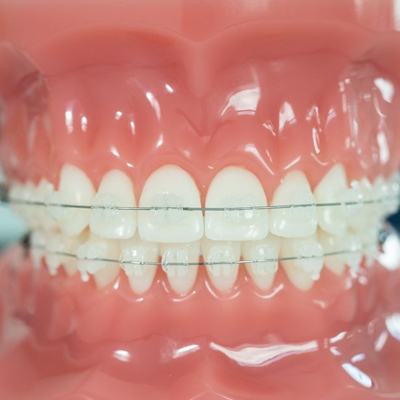
Ceramic braces are the same size and shape as metal braces, except that they have tooth-colored or clear brackets that blend in to teeth. Some even use tooth-colored wires to be even less noticeable.
Pro's: Less noticeable than metal braces
Con's: More expensive than metal braces; Brackets can stain easily if patients don’t care for them well
Invisalign
After an evaluation visit to determine whether a patient is a candidate for Invisalign®, our team will conduct a Record's Appointment where we take digital impressions, radiographs and patients photos.
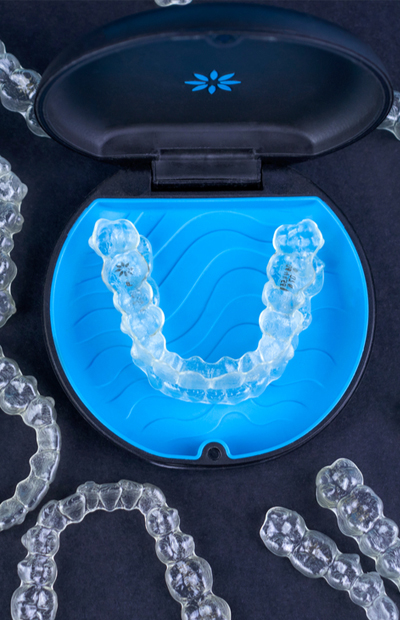
Using these, Invisalign® will use its unique computer imaging system to create a series of Invisalign® clear aligners, which will replace the standard bracket and wires of conventional orthodontics.
The first in the series of clear retainers will fit the patient's teeth as they exist at the beginning of treatment. Each successive retainer will exert forces which will move teeth to the position where the next retainer can take over. The patient must wear each removable retainer for approximately two weeks. To be most effective, the clear aligners must be worn at all times – 24 hours a day - except during meals.
The number of aligners will vary from patient to patient depending on the severity of the malocclusion. The overall length of treatment generally approximates the time needed for standard orthodontics. 80% of Invisalgn treatment cases can last between 12-24 months. Our team will provide you an estimated length of treatment after your Record's Appointment.
Treatable Case Types
Gapped Teeth
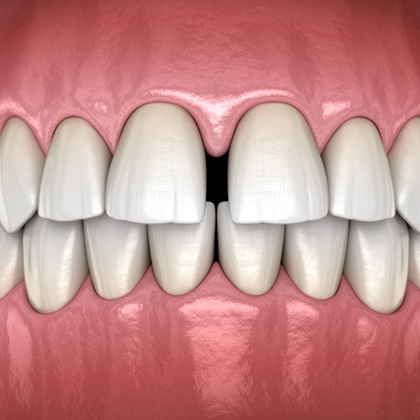
Gaps between teeth can occur with abnormal continued growth of the jawbone. Missing teeth can also cause the surrounding teeth to shift due to the extra space, creating gaps between teeth can lead to gum problems (due to lack of protection by the teeth), periodontal pockets and increased risk of periodontal disease.
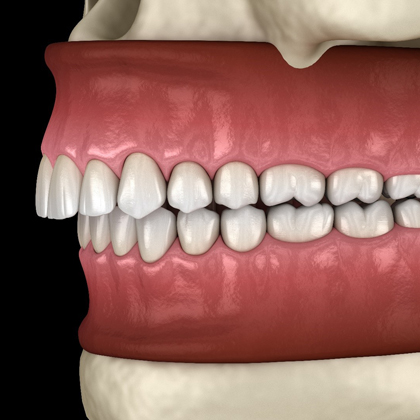
Overbite
What people commonly refer to as an "overbite" is known to dental professionals as "overjet". It occurs when the upper teeth bite over the lower teeth. It's typically caused by genetics, bad oral habits, or overdevelopment of the bone that supports the teeth. This can lead to gum problems or irritation, and/or wear on the lower teeth, and can cause painful jaw and joint problems.
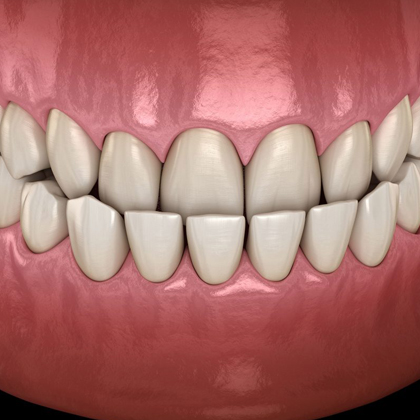
Underbite
Underbite can occur when the lower teeth protrude past the front teeth. It's usually caused by undergrowth of the upper jaw, overgrowth of the lower jaw, or both. It can also be caused by missing upper teeth. This can prevent the abnormal function of front teeth or molars, which can lead to tooth wear. It can also cause painful jaw and joint problems.
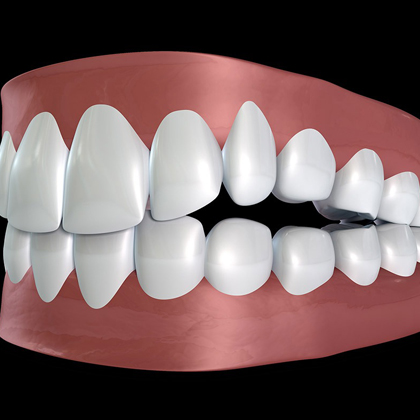
Open Bite
Open bite often occurs when some teeth are unable to make physical contact with the opposing teeth for a proper bite. Most often caused by a genetic abnormal jaw structure or excessive thumb-sucking, an open bite can cause poor or painful chewing, and even speech impairment. It can also lead to greater issues like thermo-mandibular joint disorder (TMJ).

Overly Crowded
Teeth crowding occurs when there is simply a lack of room within your jaw for all of your teeth to fit normally. When left untreated, overlay crowded teeth can get worse over time, and result in severely crooked teeth. This crowding can lead to plaque accumulation, tooth decay and an increased chance of gum disease.
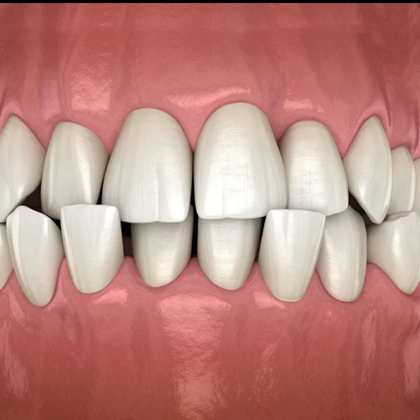
Crossbite
Crossbite can occur when the upper and lower jaws are both misaligned. It causes one or more upper teeth to bite on the inside of the lower teeth, and can happen on both the front and the sides of the mouth. This can cause wear of the teeth, gum disease and bone loss.

Itero Scanner provides digital scans of teeth (No more gagging with alginate impression)
Common Ortho Cases
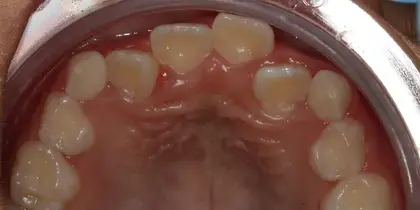
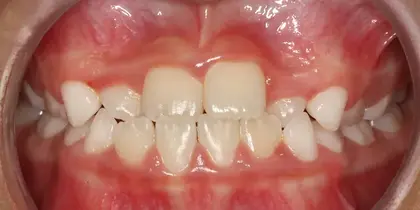
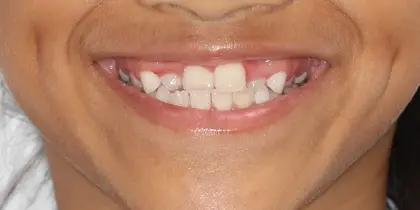
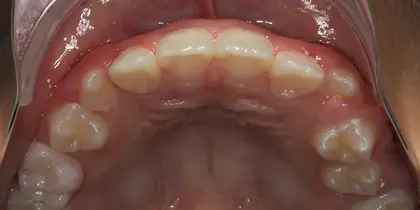
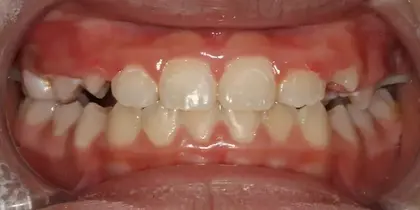
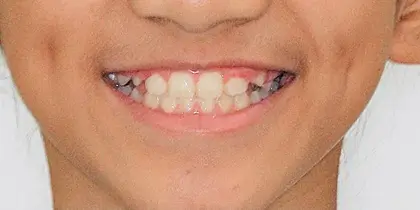
Anterior Cross Bite
Patient presents with anterior crossbite (underbite - upper teeth are positioned behind of lower teeth).
Correcting crossbite is urgent and time sensitive. A crossbite needs to be addressed while the patient is actively growing.
If orthodontics is started after 10 years of age (slower growth period for maxilla and jaw), surgery may be needed to correct jaw positioning. The patient still has baby teeth that remain, but now both adult and baby teeth are in correct positioned now facilitating normal growth and alignment.
Before
Before
Before
After
After
After
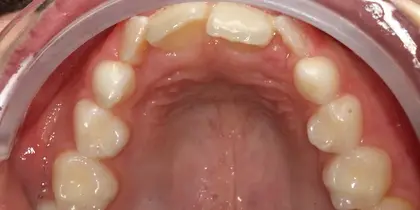
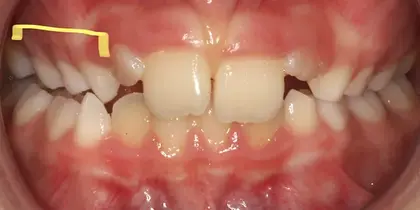
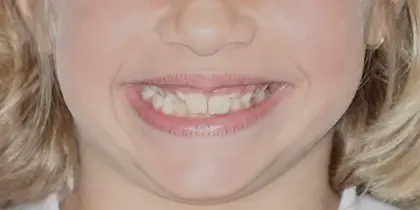
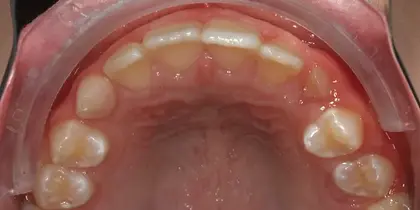
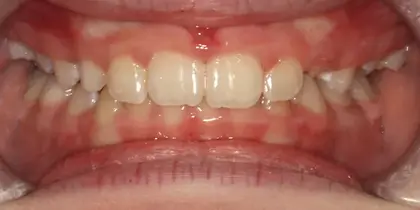
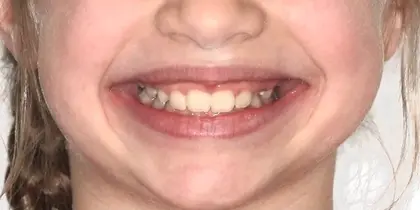
Posterior Cross Bite
Patient presents with Posterior crossbite (upper back teeth are positioned inside of lower teeth).
Correcting crossbite is urgent and time sensitive. A crossbite needs to be addressed while the patient is actively growing.
If one attempts to correct a posterior crossbite is started after 10 years of age (slower growth period for the maxilla and jaw), the patient's palatal suture my have fused already and non-ideal result may occur (more tipping of teeth instead of moving teeth and widening of nasal passages). Narrow maxilla and posterior crossbites may result in narrow nasal passages, restricted airway, snoring, mouth breathing, among other various breathing issues.
Before
Before
Before
After
After
After